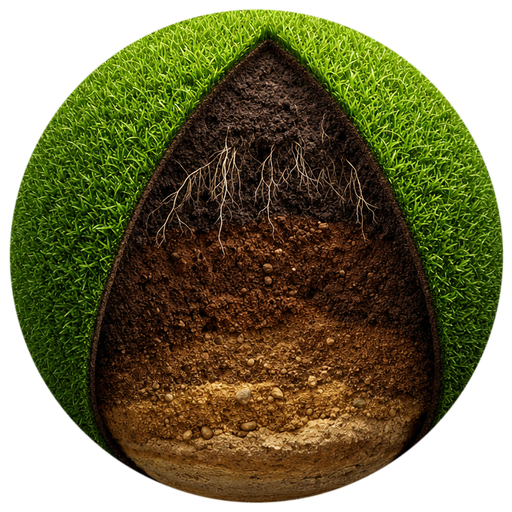
This is a sample report.
Upload your own laboratory report and get this report for your field in seconds.
See the sample water report too →Soil card
Sample field
Soil quality index
Your soil is healthy overall. If a few deficiencies are corrected, yield will rise clearly.
Strengths
- Phosphorus (P)5/5
- Boron (B)5/5
Points to improve
- Zinc (Zn)0/5
- Potassium (K)1/5
- Organic matter2/5
Chemical
63
8 measurements
Physical
–
Not measured
Biological
–
Not measured
Report interpreted with artificial intelligence
Expert interpretation of your soil
Laboratory values assessed together with your crop, your region and your irrigation method.
About your soil
A clay loam soil, slightly alkaline (pH 7.9) and highly calcareous (18.5% lime). There is no salinity problem, and the water–air balance suits maize. Three issues limit yield: low organic matter (1.4%), and insufficient zinc and iron. The high lime makes it harder for the plant to take up these two elements. Raising organic matter and giving zinc and iron as chelated foliar sprays should clearly increase yield.
- LimeVery calcareous
- pHSlightly alkaline
- Organic matterLow
- IronInsufficient
- ZincInsufficient
Priority steps
- 1
Organic matter
The soil cannot hold water and nutrients, and root growth stays weak.
- LEONARDİTİGSAŞLEONARDİT GRANÜL3,000–4,000 kg/ha
- HÜMİKİGSAŞHÜMİK ASİTTotal 100–150 L/ha
When: LEONARDİT GRANÜL into the seedbed before sowing; HÜMİK ASİT through drip, split over the season
- 2
Zinc and iron
In calcareous soil both are tied up; young leaves turn yellow with white stripes, and internodes become shorter.
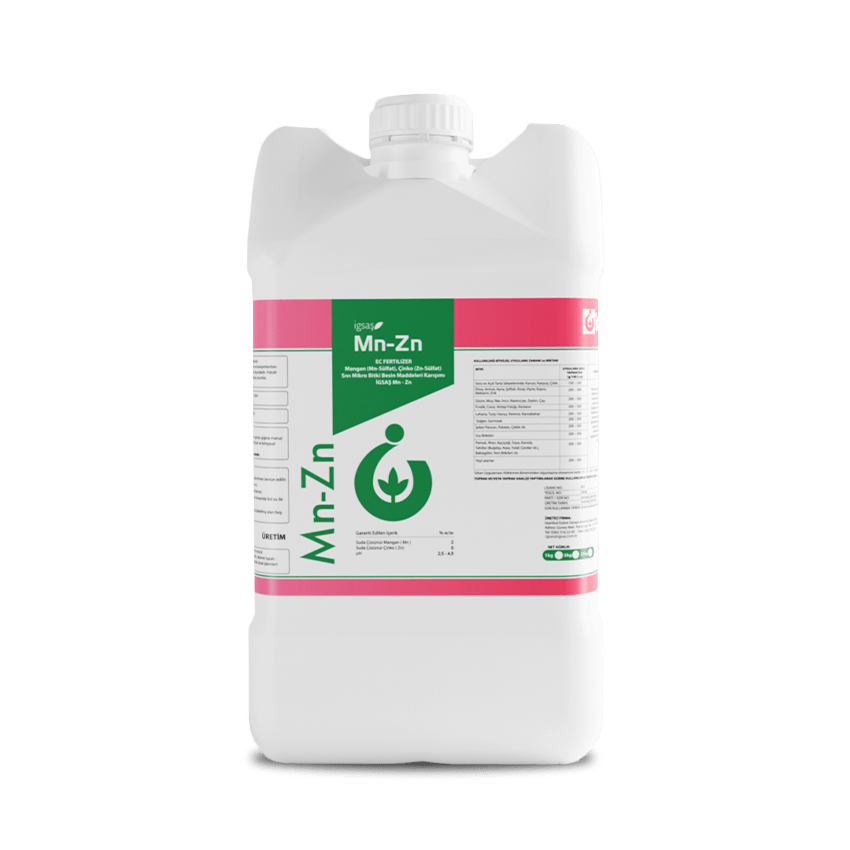 İGSAŞEDTA Zn-Mn2–2.5 L/ha
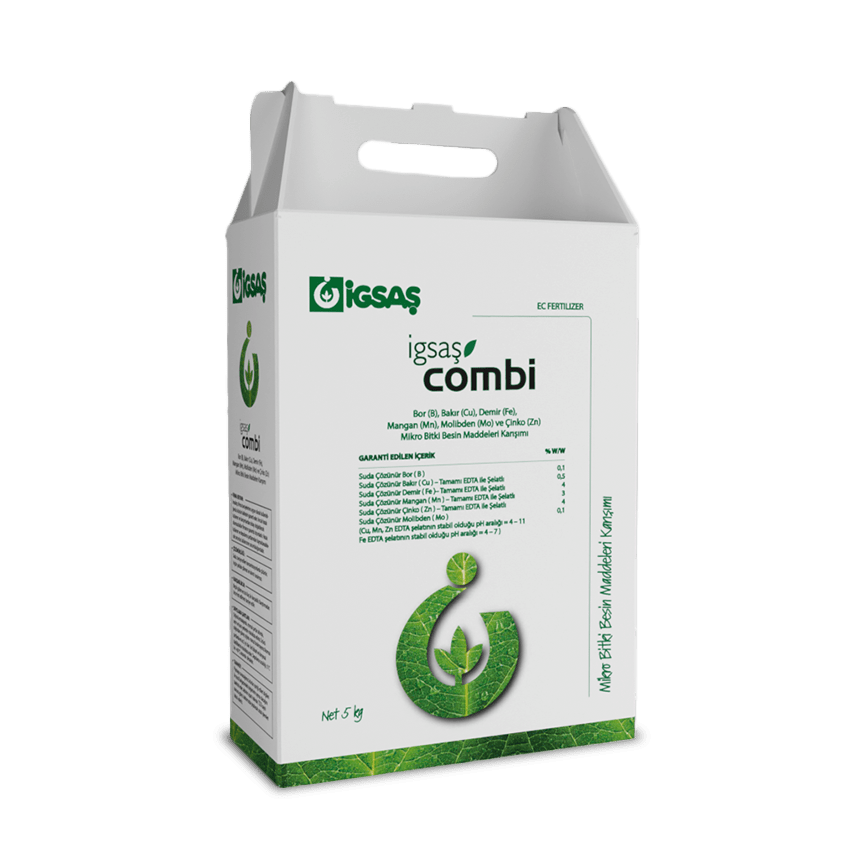 İGSAŞKOMBİ1.5 kg/ha
When: Foliar after emergence and at V6–V8; KOMBİ supplies iron together with the other micronutrients
Look at your leaves
Possible nutrient deficiencies
Based on your analysis, watch for these symptoms in maize. Tap the cards to see how to recognise them and what to do.
Heat · light · development
Does your crop get enough heat and light?
Each development stage needs a certain heat sum (GDD) and light (PAR). In the 3D view, the tanks at the back show the stage’s need, and the filling shows what is provided by the Central Anatolia region ; the plants in front show the effect of the deficit and of nutrient support.
The heat each stage needs to complete (tank height) and what your region provides (filling).
Fertiliser for this stage
İGSAŞ growth-stage programme · April · BBCH V0-V3
Drip irrigation
- İGSAŞNPK 12-40-1230–40 kg/ha
- İGSAŞMOL-5010–15 L/ha
- KIANAKIANA EARTH PLUS2 kg/ha
Foliar
- İGSAŞEDTA Zn-Mn2 L/ha
During the season
İGSAŞ products for your field
Sum of all stages of the programme, for your 25 field. You can plan your purchases with these figures.
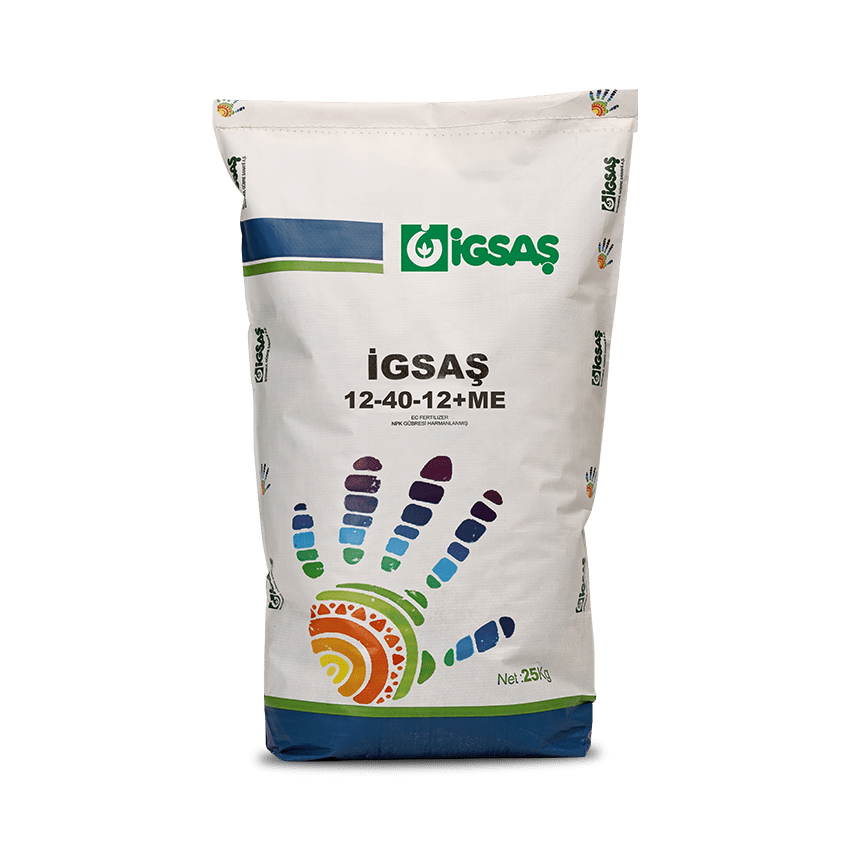
NPK 12-40-12
Phosphorus-rich; root and early growth (drip/sprinkler).
Total for your field
75–100 kg
30–40 kg/ha
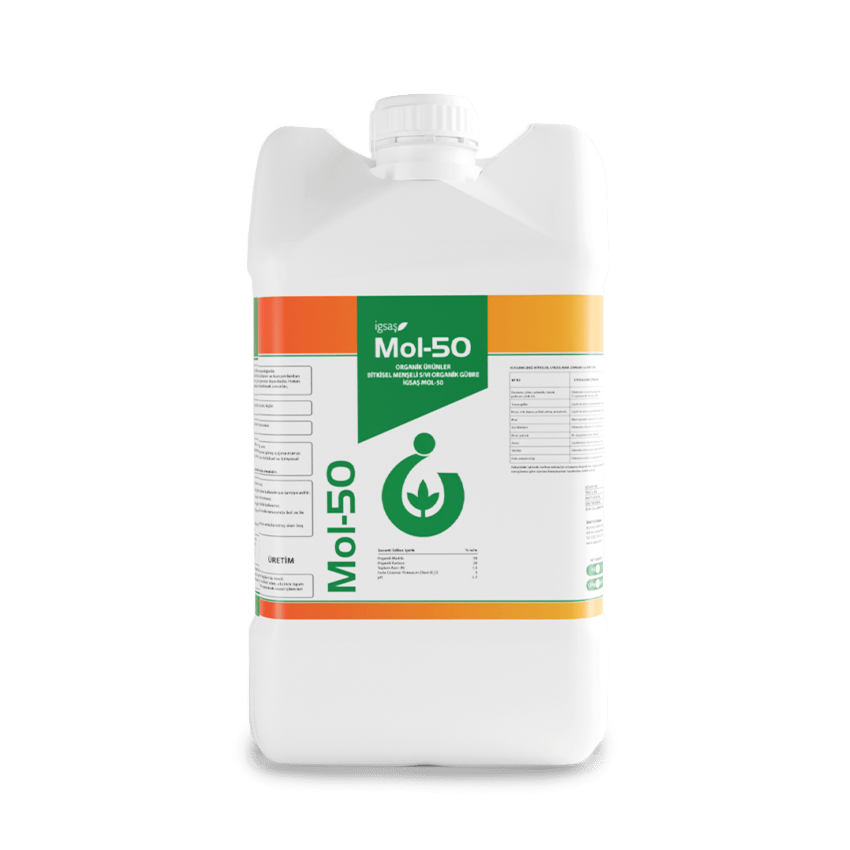
MOL-50
Supports nutrient uptake at the root (works where the root takes up nutrients).
Total for your field
25–38 L
10–15 L/ha
- KIANA
KIANA EARTH PLUS
Root-zone microbial consortium; boosts root growth and nutrient uptake.
Total for your field
5 kg
2 kg/ha
EDTA Zn-Mn
Zinc and manganese; especially in calcareous and alkaline soils.
Total for your field
11 L
4.5 L/ha
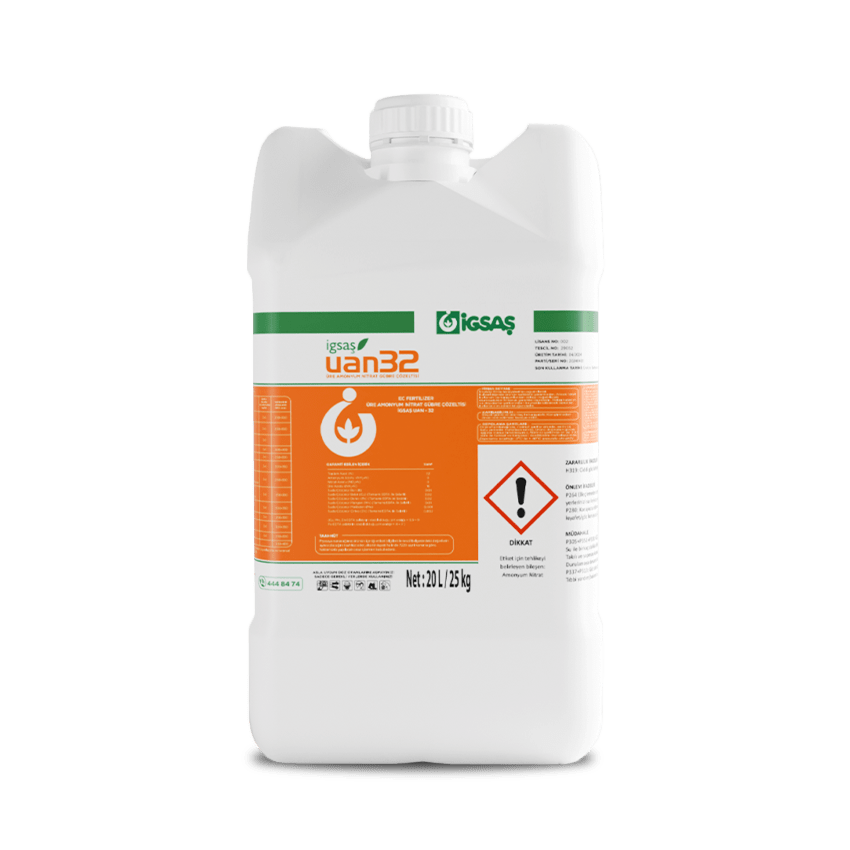
UAN-32
Liquid nitrogen; top dressing.
Total for your field
600–750 L
240–300 L/ha
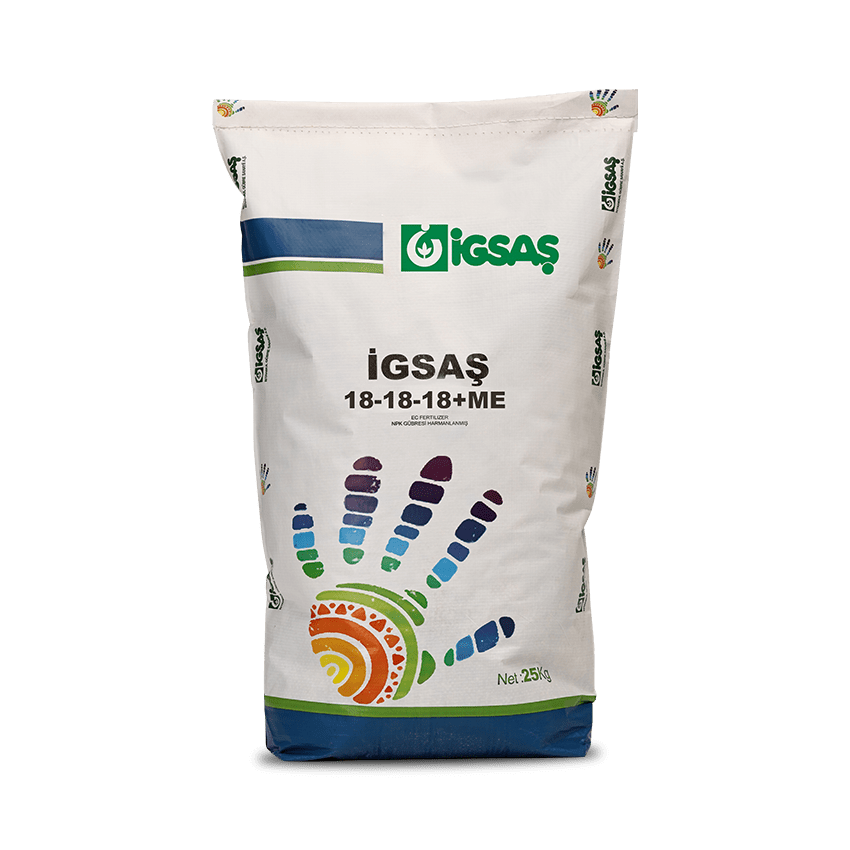
NPK 18-18-18
Balanced; vegetative growth.
Total for your field
100 kg
40 kg/ha
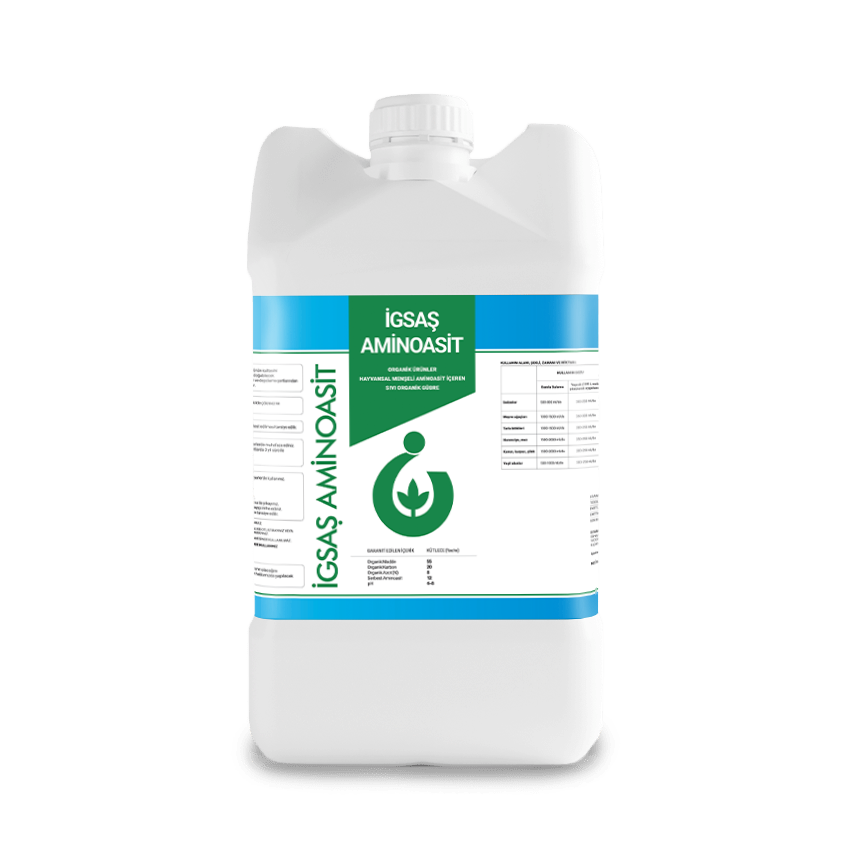
AMİNO ASİT
Speeds up root and shoot growth and supports recovery after stress.
Total for your field
6.3 L
2.5 L/ha
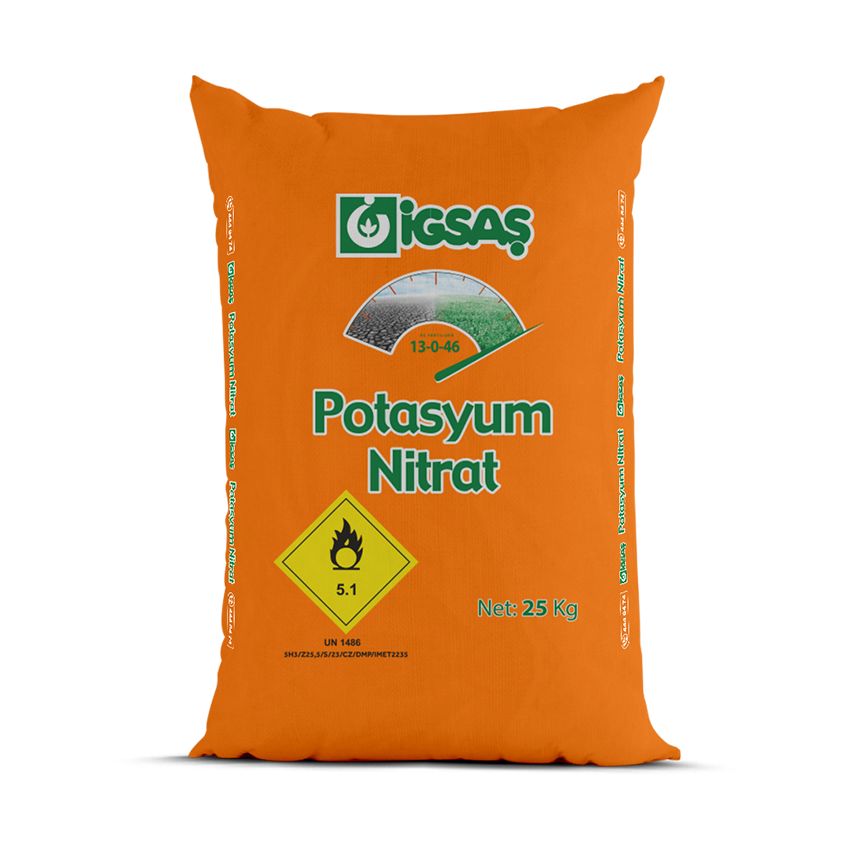
KNO₃
Potassium nitrate; filling and sizing.
Total for your field
225–325 kg
90–130 kg/ha
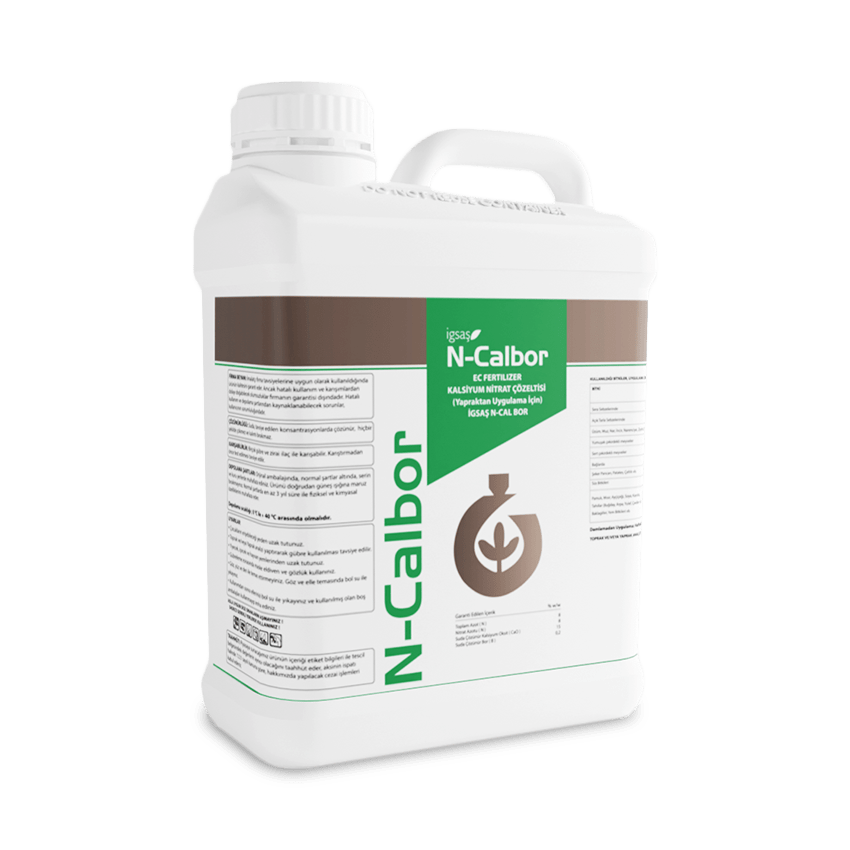
N-CALBOR
Nitrogen + calcium + boron; flower/fruit set and cell-wall (skin) strength.
Total for your field
6.3 L
2.5 L/ha
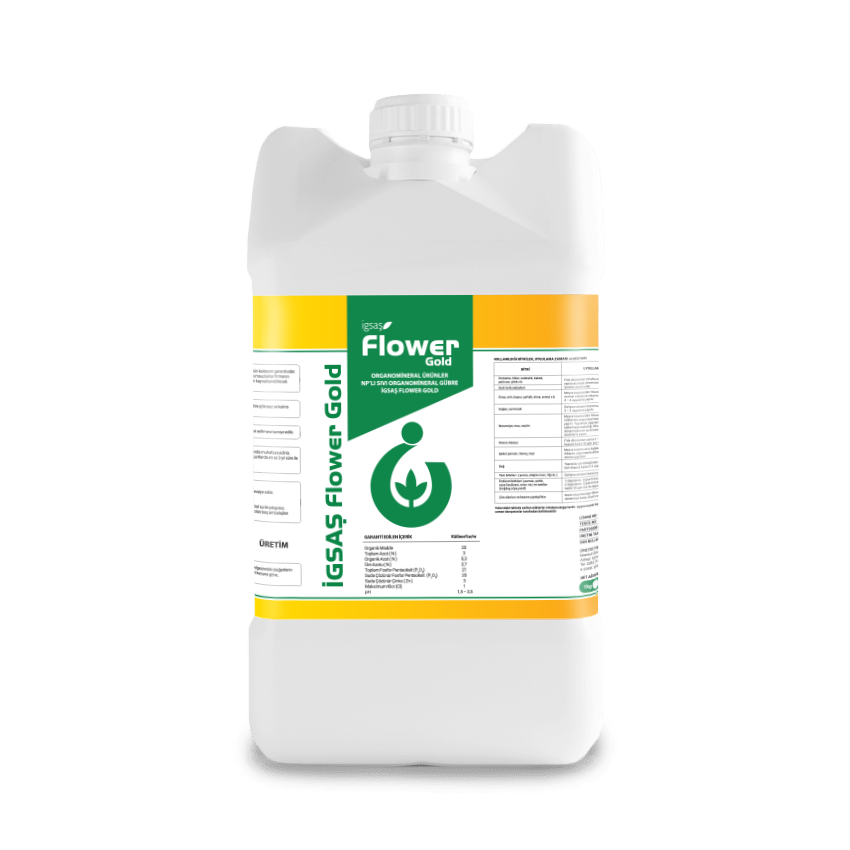
FLOWER GOLD
Supports fruit set during flowering and pollination.
Total for your field
5 L
2 L/ha
- KIANA
KIANA CLIMATE PLUS
Protects the plant against frost, heat and drought stress (stress buffer).
Total for your field
5–7.5 kg
2–3 kg/ha
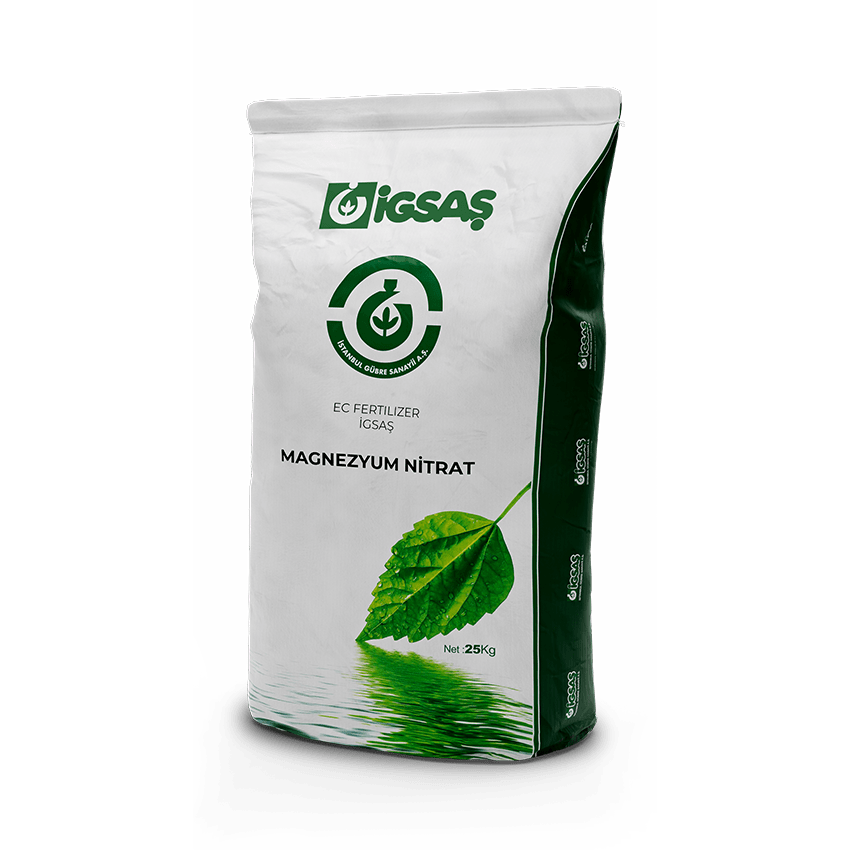
Mg NİTRAT
Magnezyum + azot.
Total for your field
50–75 kg
20–30 kg/ha
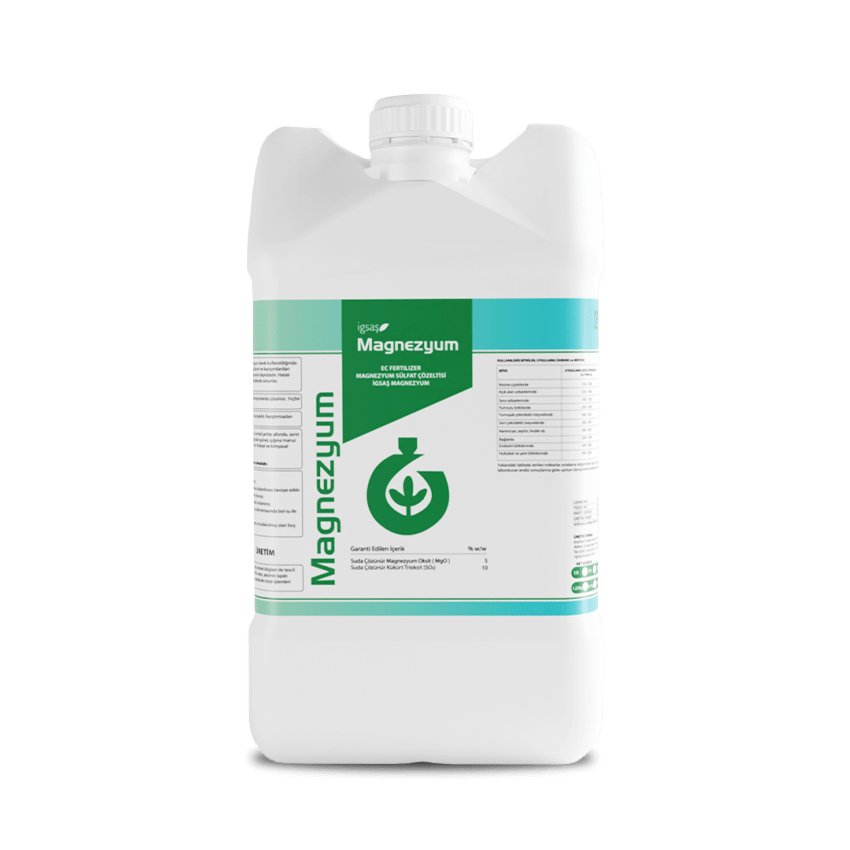
MAGNEZYUM
Magnesium for chlorophyll and grain/fruit filling.
Total for your field
10 kg
4 kg/ha
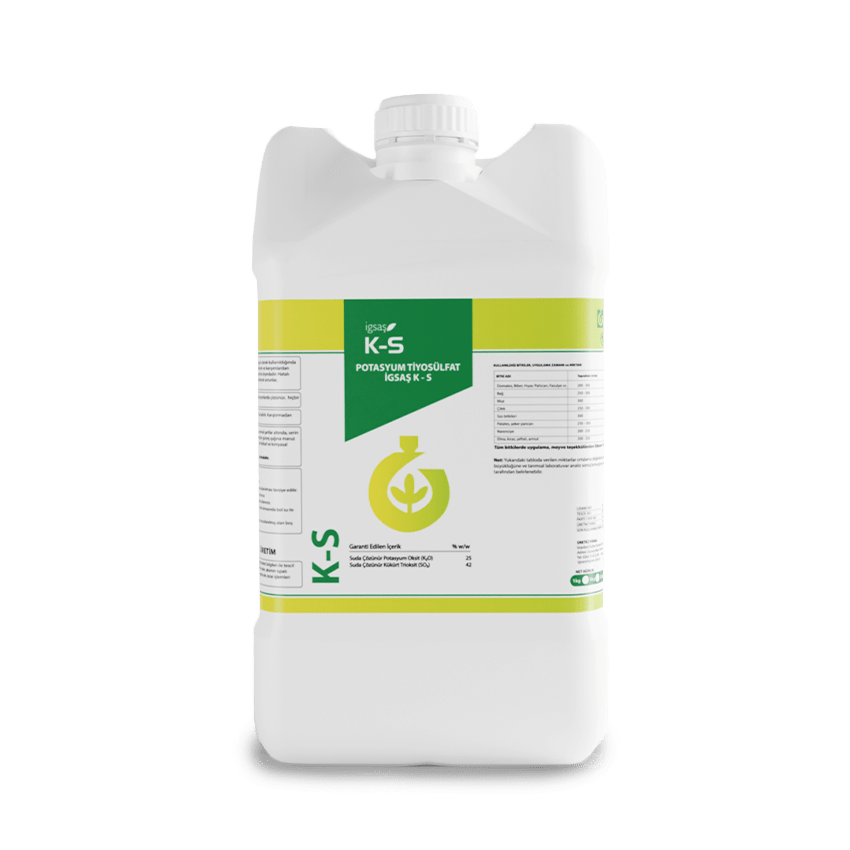
K-S
Potassium + sulphur; filling and quality.
Total for your field
13 kg
5 kg/ha
- LEONARDİT
LEONARDİT GRANÜL
Long-lasting humic source; raises organic matter in the seedbed.
Total for your field
7,500–10,000 kg
3,000–4,000 kg/ha
- HÜMİK
HÜMİK ASİT
Makes up for low organic matter; improves soil structure and nutrient retention.
Total for your field
250–375 L
100–150 L/ha
KOMBİ
Mikro element kombinasyonu.
Total for your field
3.8 kg
1.5 kg/ha
For foliar applications, the amount depends on the spray volume you use. Doses come from Prof. Dr. Metin Turan’s İGSAŞ growth-stage programme (Z-card); product information belongs to İGSAŞ.
At a glance
Your soil’s condition
Acidity (pH)
7.9Slightly alkaline
Suitable: 5.5 – 7.5
Soil structure (texture)
CL (Clay loam)
Nutrients and chemical status
- Electrical conductivity (EC)0.9 µS/cmNot salineSuitable: maximum 4,000
- Total salts0.03 %Not salineSuitable: maximum 0.2
- Lime18.5 %Very calcareousSuitable: maximum 5
- Organic matter1.4 %LowSuitable: minimum 2
- Available phosphorus (Olsen P)20.1 mg/kgMediumSuitable: 13.1 – 26.2
- Available potassium (K, ammonium acetate)199.2 mg/kgSufficientSuitable: minimum 83
- Iron (Fe)3.1 mg/kgInsufficientSuitable: minimum 4.5
- Zinc (Zn)0.4 mg/kgInsufficientSuitable: minimum 0.7
- Boron (B)0.9 mg/kgSufficientSuitable: 0.5 – 3
Light green zone: suitable range
Details
Laboratory tableAll measurements, suitable ranges and differences+
| Parameter | Result | Suitable range | Status and difference |
|---|---|---|---|
| Salinity, acidity and lime | |||
| pH | 7.9Suitable: 5.5 – 7.5 | 5.5 – 7.5 | Slightly alkaline 0.4 above (5 %) |
| Electrical conductivity (EC)µS/cm | 0.9Suitable: maximum 4,000 | maximum 4,000 | Not saline |
| Total salts% | 0.03Suitable: maximum 0.2 | maximum 0.2 | Not saline |
| Lime% | 18.5Suitable: maximum 5 | maximum 5 | Very calcareous 13.5 points above (270 %) |
| Nutrients | |||
| Organic matter% | 1.4Suitable: minimum 2 | minimum 2 | Low 0.6 points below (30 %) |
| Available phosphorus (Olsen P)mg/kg | 20.1Suitable: 13.1 – 26.2 | 13.1 – 26.2 | Medium |
| Available potassium (K, ammonium acetate)mg/kg | 199.2Suitable: minimum 83 | minimum 83 | Sufficient |
| Micronutrients | |||
| Iron (Fe)mg/kg | 3.1Suitable: minimum 4.5 | minimum 4.5 | Insufficient 1.4 mg/kg below (31 %) |
| Zinc (Zn)mg/kg | 0.4Suitable: minimum 0.7 | minimum 0.7 | Insufficient 0.3 mg/kg below (43 %) |
| Boron (B)mg/kg | 0.9Suitable: 0.5 – 3 | 0.5 – 3 | Sufficient |
| Soil structure | |||
| Texture class | CL (Clay loam) | — | Information |
| Water saturation% | 58 | — | Clay loam |
| Sand percentage% | 32 | — | Information |
| Silt percentage% | 36 | — | Information |
| Clay percentage% | 32 | — | Information |
How was the quality index calculated?average of the 0–5 points of 8 measurements → 63/100+
What is the quality index based on?
8 average of the 0–5 points of the parameters: 3.1 / 5 → 63 / 100
- Zinc (Zn)0.4 mg/kg0/5
- Potassium (K)0.509 me/100 g1/5
- Organic matter1.4 %2/5
- Iron (Fe)3.1 mg/kg3/5
- pH7.9 4/5
- Phosphorus (P)20.087 mg/kg5/5
- Lime18.5 %5/5
- Boron (B)0.9 mg/kg5/5
What do these values mean?+
- pH
- Shows whether the soil is acidic or calcareous; it determines whether the plant can take up nutrients.
- Electrical conductivity (EC)
- Indirect measure of the amount of salt in the soil. If it is high, the plant finds it hard to take up water.
- Total salts
- Salinity can damage the roots.
- Water saturation
- It is the first clue to whether the soil is sandy or clayey.
- Sand percentage
- Sand lets water through quickly and does not hold nutrients.
- Silt percentage
- Silt is particles of a size between sand and clay.
- Clay percentage
- Clay holds water and nutrients, but too much makes the soil heavy.
- Lime
- Too much lime hinders the passage of iron, zinc and phosphorus into the plant.
- Organic matter
- The life and fertility of the soil; improves water retention and structure.
- Available phosphorus
- Needed for root development and flowering.
- Available potassium
- Increases the plant’s resistance to disease and drought and the quality of the harvest.
- Iron (Fe)
- Needed for leaves to stay green; its deficiency is common on calcareous soils.
- Zinc (Zn)
- Needed for growth and grain filling; its deficiency is common in wheat.
- Boron (B)
- Needed for flowering and seed formation; toxic in excess.