Irrigation water card
Can be used with caution
The water can be used; if you take the measures below there will be no yield loss or soil damage.
C3S1 = high salinity, slightly sodic water
Salinity
1,150 µS/cm
High salinity
Sodium ratio
1.8 SAR
Slightly sodic
Sodium bicarbonate
-1.7 RSC me/l
Can be used safely
Boron
0.6 mg/l
No restriction
What should you do?
Your well water has high salinity (C3) but little sodium (S1). Maize tolerates this salinity and loses hardly any yield; only chloride is somewhat high and there is a risk of lime in the emitters.
- 1With each irrigation, give 16 % more water than the crop needs, so that the salt is leached below the roots.
- 2Do not let the soil dry out: irrigate regularly, without skipping irrigations.
- 3Add acid to the irrigation water 2–3 times per season, flush the drip lines and clean the filter every week.
- 4As potash fertiliser, use potassium sulphate or potassium nitrate instead of potassium chloride.
- 5Your water supplies nitrogen: you can reduce nitrogen fertiliser slightly.
Maize keeps its yield at this salinity and is not affected by this boron level.
Effect on your crop
At this salinity maize expected yield (FAO 29, table 4)
To move the salt away from the root zone, apply approximately 16 % more water than the crop needs (leaching water).
Maize: moderately tolerant to boron (limit 2–4 mg/l). No boron toxicity is expected.
Irrigation method recommendation
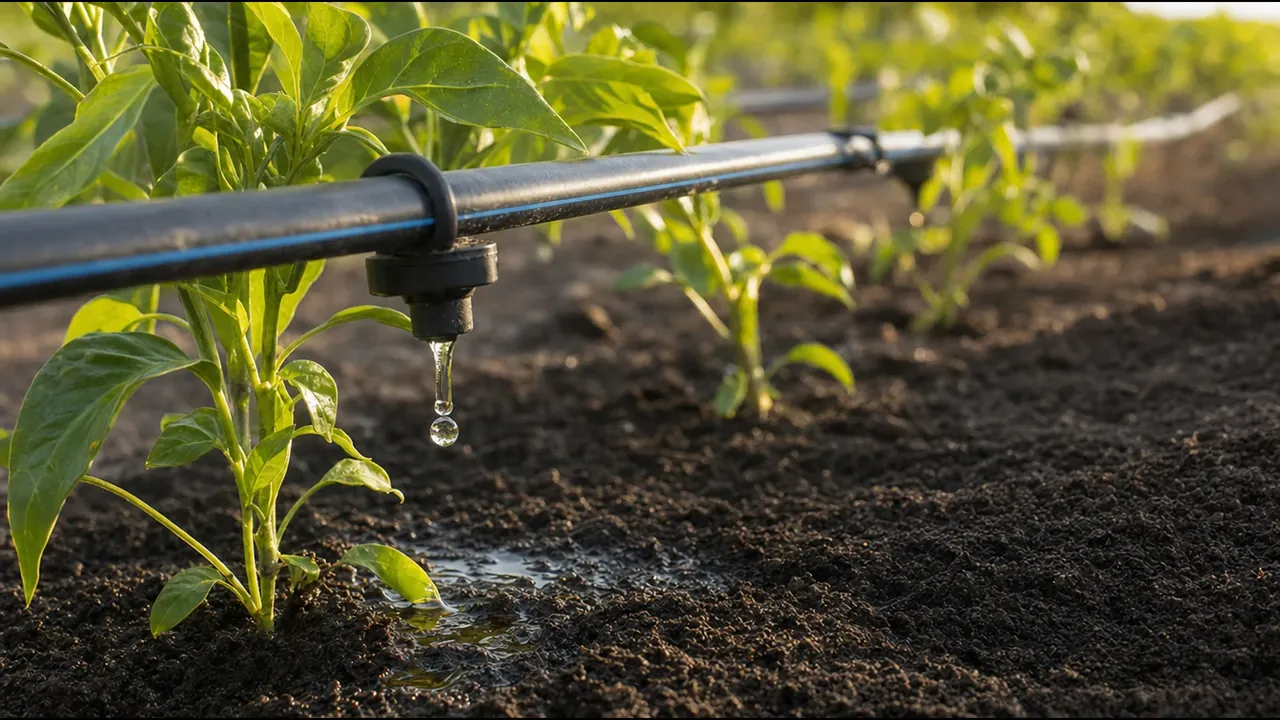
Our recommendation for this water: Drip
Drip is the most suitable method for this water: as it does not wet the leaves, chloride does not burn them, and as the soil stays moist, the salt is kept away from the roots.
 RecommendedThe one you use now
Drip
- It is the safest method with saline water: the soil stays moist, the salt is pushed to the edge of the wetted zone and the leaves do not get wet.
- As the water does not touch the leaves, sodium and chloride do not burn them.
- Against lime in the emitters, flush with acid several times per season.
 Use with caution
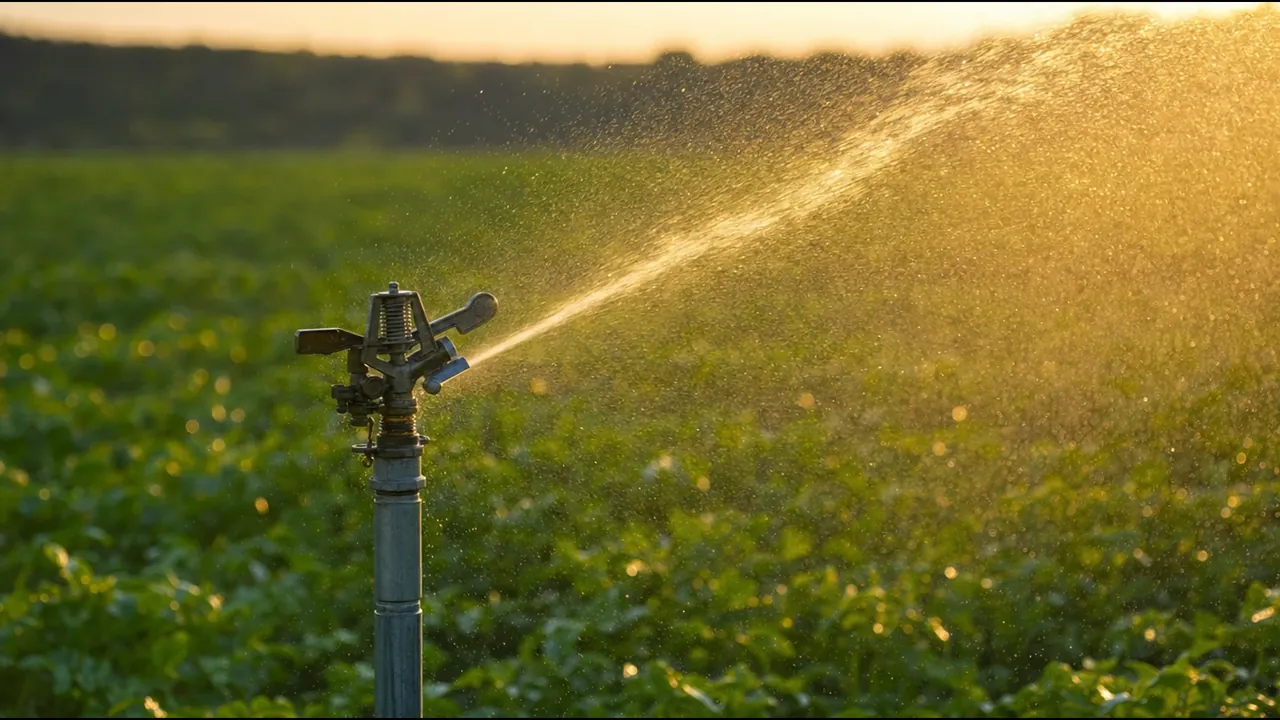
Sprinkler
- High sodium or chloride (Na 3.4, Cl 4.6 me/l): it can scorch the leaves; irrigate only in the evening and at night.
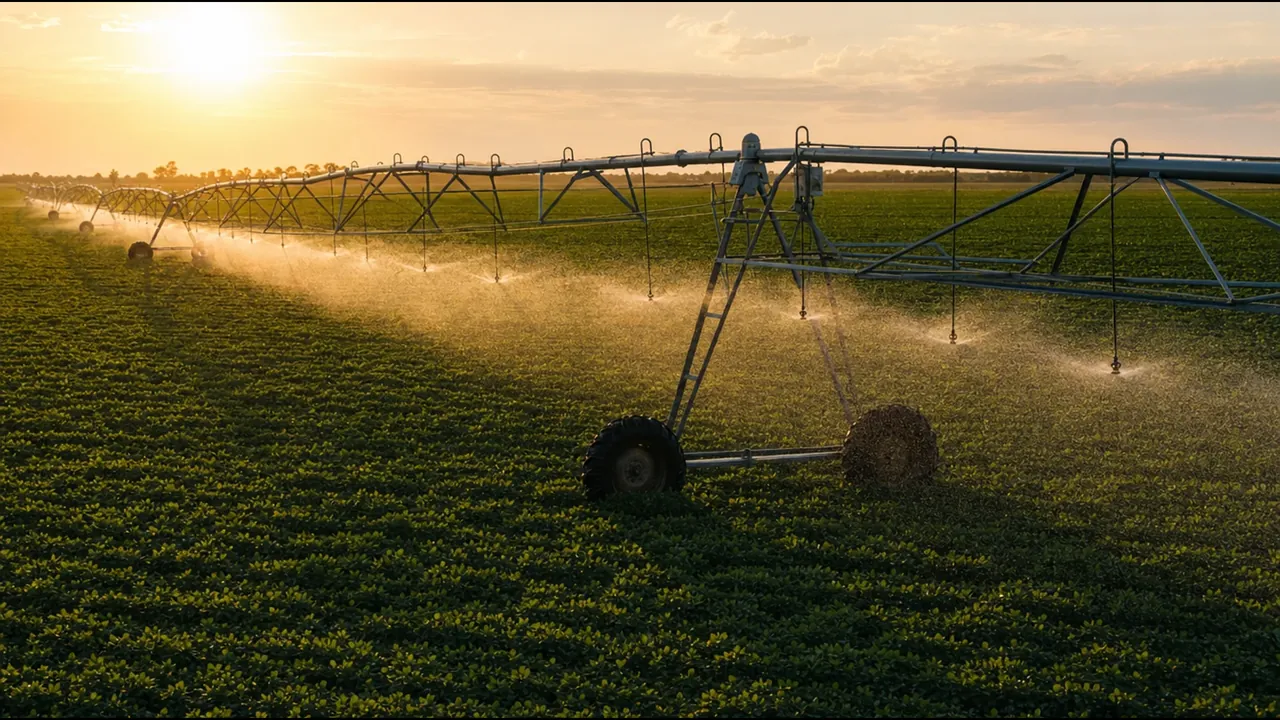 Use with caution
Pivot (centre pivot)
- High sodium or chloride (Na 3.4, Cl 4.6 me/l): it can scorch the leaves; irrigate only in the evening and at night.
 Use with caution
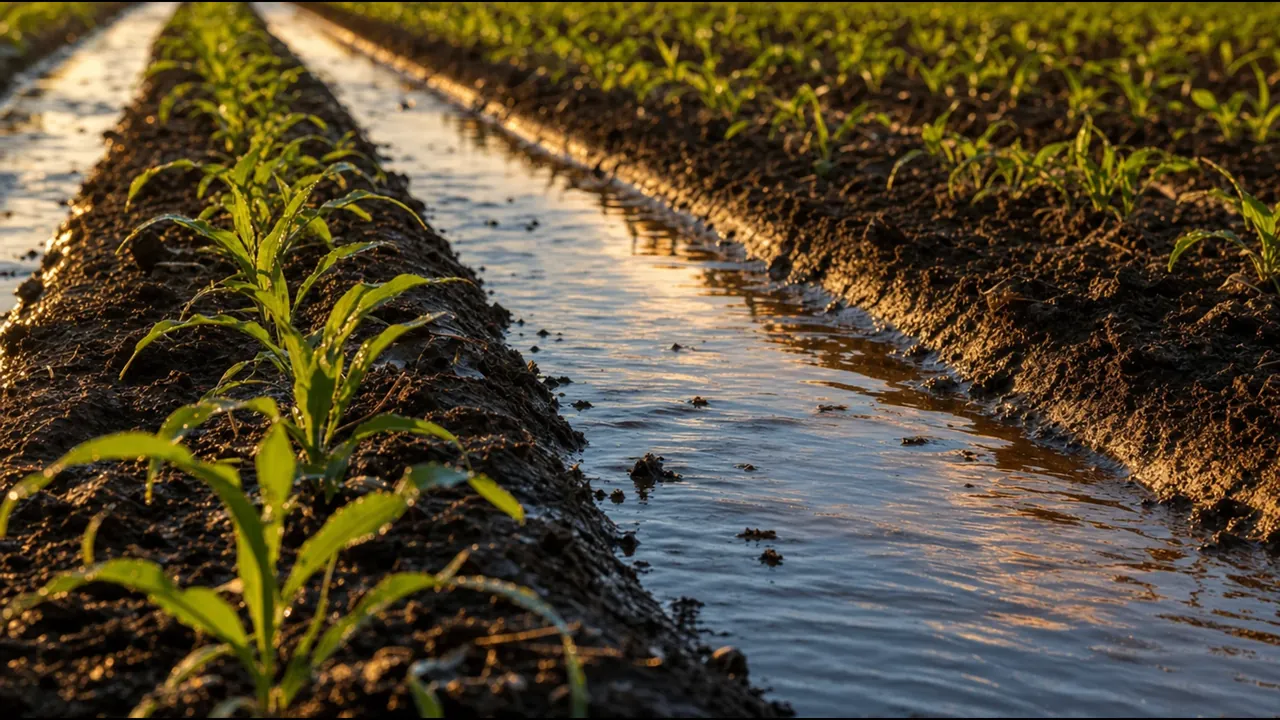
Surface / furrow irrigation
- Salt builds up on the ridges; if drainage is poor, the soil becomes saline.
Detailed assessment according to FAO 29
What is your water telling you?
Salinity
1,150 µS/cm (1.15 dS/m)
Salt makes it hard for the plant to take water from the soil and builds up in it over time. At this salinity, the expected yield of maize is about 99 % (compared with salt-free water).
What to do: Do not let the soil dry out, irrigate regularly and give extra leaching water from time to time. Good drainage is needed.
Source: FAO 29, table 1; table 4
Chloride
4.6 me/l (163 mg/l)
Chloride builds up in the leaves; in sensitive crops it burns tips and edges.
What to do: Avoid chloride fertilisers (potassium chloride).
Source: FAO 29, table 1
Risk of emitter clogging
pH 7.9 · HCO₃ 5.6 me/l
With high pH and bicarbonate, lime builds up in the emitters, which clog over time and distribute water poorly.
What to do: Several times per season, add acid (nitric or phosphoric) to the irrigation water and flush the lines; clean the filter regularly.
Source: Nakayama and Bucks (1991)
Nitrate nitrogen
6 mg/l
The water brings nitrogen: it is free fertiliser, but in sensitive crops it can cause excessive leaf growth and late ripening.
What to do: Reduce nitrogen fertiliser slightly; every 1000 m³ of water brings ≈ 6 kg of nitrogen.
Source: FAO 29, table 1
Water infiltration into the soil
SAR 1.8 · EC 1.15 dS/m
Water enters the soil well; no crust is expected.
Source: FAO 29, table 1
Sodium (taken up by the root)
SAR 1.8
No sodium damage is expected.
Source: FAO 29, table 1
Boron
0.6 mg/l
Maize: moderately tolerant to boron (limit 2–4 mg/l). No boron toxicity is expected.
Source: FAO 29, table 16
Residual sodium carbonate (RSC)
-1.7 me/l
Carbonate and bicarbonate do not exceed calcium and magnesium; no sodium carbonate builds up.
Source: Eaton (1950)
pH
7.9
Normal range: 6.5–8.4.
Source: FAO 29, table 1
Where your water sits in the class diagram
US Salinity Laboratory diagram (Richards, 1954). Classes such as “C3S1” that laboratories report come from here.
Salinity classes
- C10–250 µS/cm · Slightly saline
- C2250–750 µS/cm · Moderately saline
- C3750–2,250 µS/cm · High salinity
- C4>2,250 µS/cm · Very high salinity
Sodium classes
- S1Slightly sodic · Does not damage the soil structure.
- S2Medium sodium · On fine-textured (clay) soils it can compact over time.
- S3High sodium · Damages the soil; gypsum and organic matter are needed.
- S4Very high sodium · Generally not suitable for irrigation.
The sodium limits change with salinity (sloping lines of the diagram).